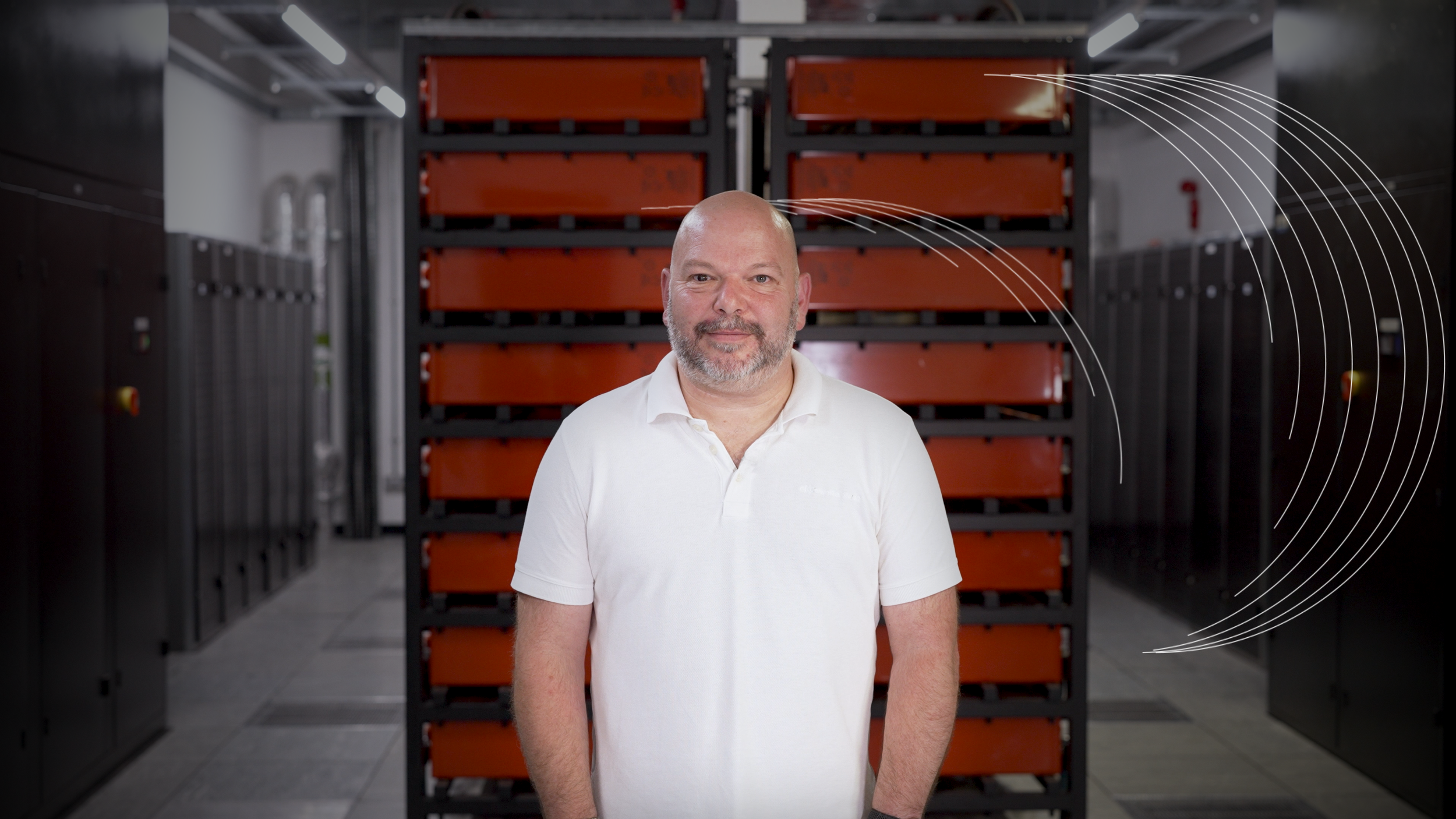
Making Connections Documentary Series - Director, Producer, Editor & Animator, Vodafone Group, 2025 - ongoing
Most of the infrastructure that makes modern life possible is invisible. The cables beneath the ocean floor. The spectrum in the air above our heads. The network engineers working night shifts in buildings nobody photographs. The satellites tracing silent arcs above the atmosphere. Connectivity is the condition of contemporary existence - most people don’t know how it works, who built it, or what it would mean to lose it.
Making Connections began with that invisibility as its subject.
The Series
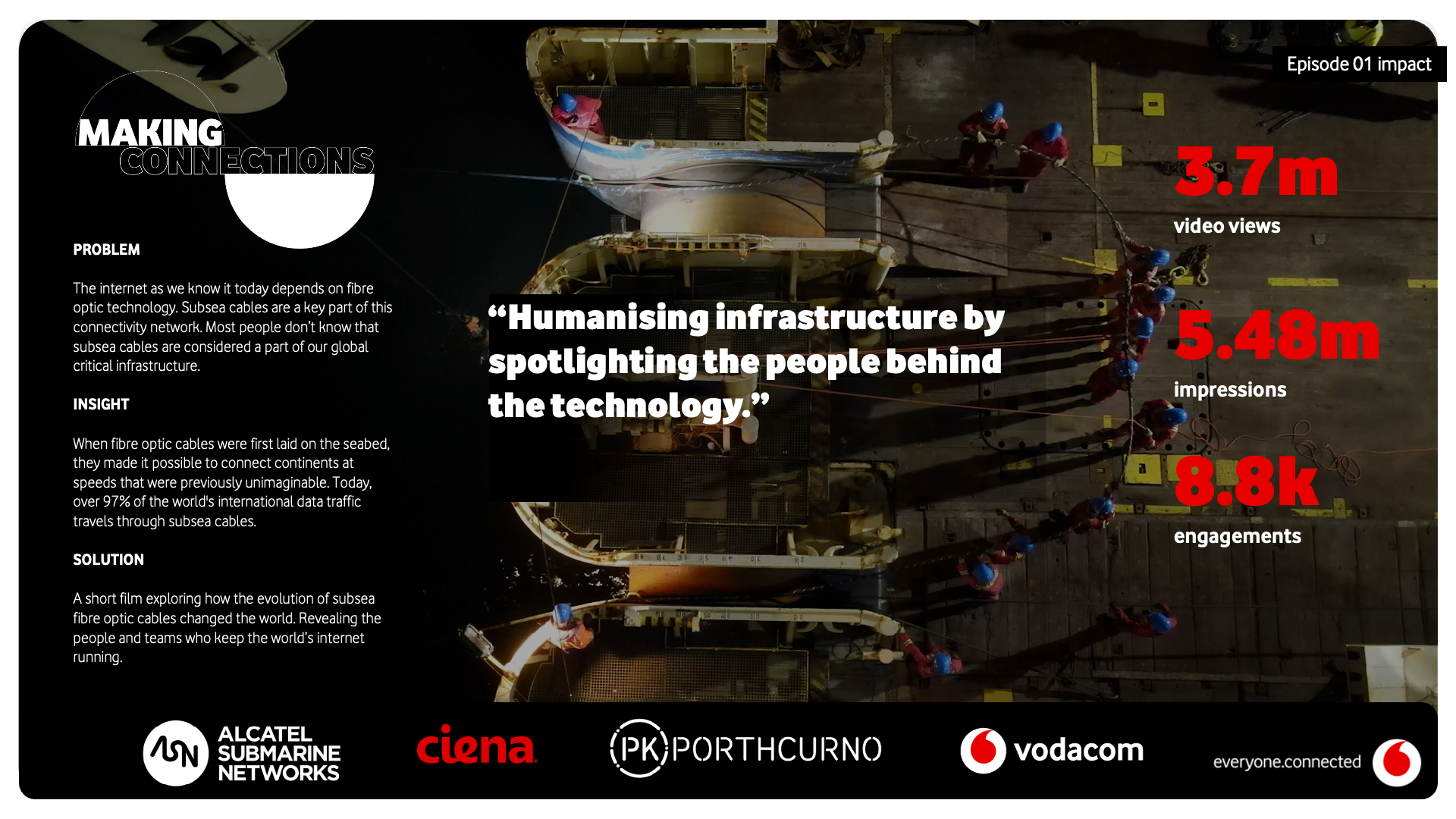
A short documentary series uncovering the hidden infrastructure that powers the modern world, Making Connections follows the engineers, architects, technicians, and specialists who keep global connectivity running - from subsea cable stations on the Cornish coast to data centres, network operations rooms, and the emerging frontier of satellite communications.
Each episode takes a single dimension of the connectivity story and traces it from its material and historical roots to the present day and into the future - treating telecommunications not as a service industry but as what it has quietly become: critical national and global infrastructure, as foundational to contemporary life as roads, water, and power.
The series is built on a consistent editorial conviction: that the most effective way to make infrastructure legible is to make it human. The technology is the subject. The people are the entry point.
Episode One: Subsea Cables
The first episode took the most invisible part of the internet's physical architecture as its focus.
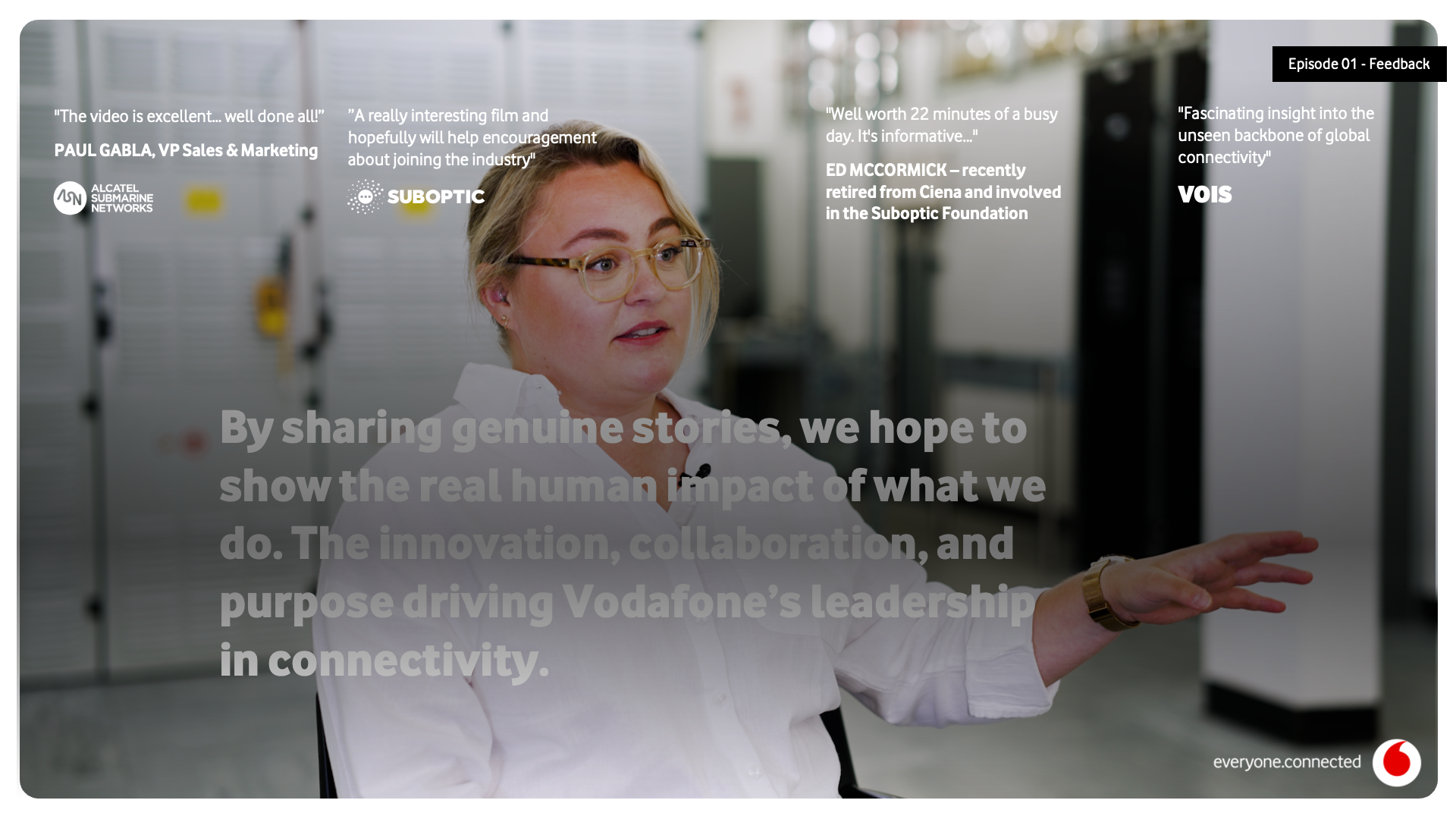
Most people, if they think about it at all, assume the internet travels through satellites. The reality is stranger, more fragile, and more extraordinary: the internet as we know it depends on fibre optic technology, and subsea cables are its critical backbone - running across the ocean floor at depths where the pressure would crush a submarine, through glass fibres thinner than a human hair, maintained by a small and largely invisible global workforce. When fibre optic cables were first laid on the seabed, they made it possible to connect continents at speeds that were previously unimaginable. Today, over 97% of the world's international data traffic travels through them - and almost nobody knows they exist, let alone that they are considered part of our global critical infrastructure.
That invisibility was the starting point. The solution was a short film exploring how the evolution of subsea fibre optic cables changed the world - and revealing the people and teams who keep the world's internet running.
The film followed the cables from the seabed to the landing station: from the engineers at Alcatel Submarine Networks and Ciena who design and maintain the infrastructure, to the curators at the Porthcurno Museum where the history of undersea communications - from the first telegraph cables to the fibre optic present - is preserved, to Vodacom's perspective on what subsea connectivity means for economic development and social access across the African network. The human stories were not illustrative of the technology - they were the technology, seen from the inside.
The creative and editorial approach was developed through extended research before a camera was pointed at anything - building a genuine understanding of the subject so that the film could treat its audience as intelligent, curious, and capable of being interested in how the world actually works. The result was 22 minutes that did exactly that.
Making Connections sits at the intersection of two things I have always been drawn to: the hidden systems that shape daily life, and the people who live and work inside them without being seen.
The themes that run through this series - invisible infrastructure, technological memory, the human stories embedded in systems most people never think about - are the same themes that run through everything else I make. The subsea cable that carries the world's data beneath the ocean is not so different, in the end, from the drainage ditches that reclaimed the Romney Marsh from the sea: both are the accumulated labour of people who built something vast and necessary and largely forgotten, into which the present continues to pour itself without knowing it.
Documentary filmmaking, at its best, is an act of attention - a decision to look at something carefully enough that other people start to see it too. That is what this series is for.
Episode Two: Networks & The Evolution of Connectivity
The second episode takes the full architecture of modern connectivity as its subject - from the fibre beneath our streets and the spectrum in the air to 5G networks, IoT systems, and the satellites now entering low Earth orbit.
The brief emerged from a specific and under-examined tension: connectivity is invisible until it fails. Customer experience, business, public services, and national security all depend on robust networks - and yet the networks have never been more sophisticated, more reliable, or more essential. Perception hasn't kept pace with reality. Connectivity brands have become background utilities, like gas or electricity: unnoticed when they work, deeply resented when they don't. The story behind how our modern networks work - and why it matters - is almost entirely hidden from the people who depend on them every day.
The insight running beneath this episode is that telecoms is no longer just a service provider. It has become a strategic industry at the centre of economic ambition, national competitiveness, and daily human experience. Europe and the UK face a defining test: infrastructure scale and competitiveness. The proposed Vodafone-Three merger embodies that challenge - combining scale, innovation, and security in a sector that underpins everyday life. Its outcome will determine whether Europe can turn big policy ambitions around digital integration into real-world infrastructure that works.
The solution is a short film that lifts the lid - tracing how connectivity actually works, from fibre beneath our streets to spectrum in the air and satellites in orbit, and exploring the evolution that made real-time digital living possible. We meet the network engineers, architects, operators, partners, and industry experts who keep hyper-connected societies running, and hear from them on the history, present day, and future of the world's networks.
The episode is structured across three interlocking threads: Industry - why the telecoms sector matters strategically, economically, and politically; Technology - how connectivity actually works, from the physics of spectrum to the architecture of a modern network; and People - the engineers, architects, operators, and partners who make it run.
Research and development for this episode extended into the political and regulatory dimensions of the sector, giving the film a wider frame of reference than a conventional corporate documentary would reach for. The subject is not just how connectivity works. It is why it matters, and what is at stake in getting it right.
The Series Pipeline
Making Connections is conceived as an ongoing series, with future episodes planned across:
Connectivity - how real-time connectivity works across subsea, terrestrial, mobile, and wireless systems, and the people who keep it running
Customer Experience - how Vodafone is rebuilding the customer relationship around reliability, simplicity, and trust - from the first "Number please?" to AI-assisted support
Devices & IoT - the evolution of connected devices from smartphones to smart sensors, and the hidden hardware powering the global surge in IoT
Future: AI, Quantum & Satellites - the next wave of telecom innovation, and the people building the networks that don't yet exist
Each episode follows the same editorial discipline: deep research before production, human stories as the primary vehicle for technical understanding, and a consistent conviction that hidden infrastructure is one of the most interesting subjects in the world - if you are willing to look at it long enough.