Pagoda, Aeolian, Aruna
Large-scale aerial light sculptures by Helena Doyle.
Pagoda, Aeolian, Aruna
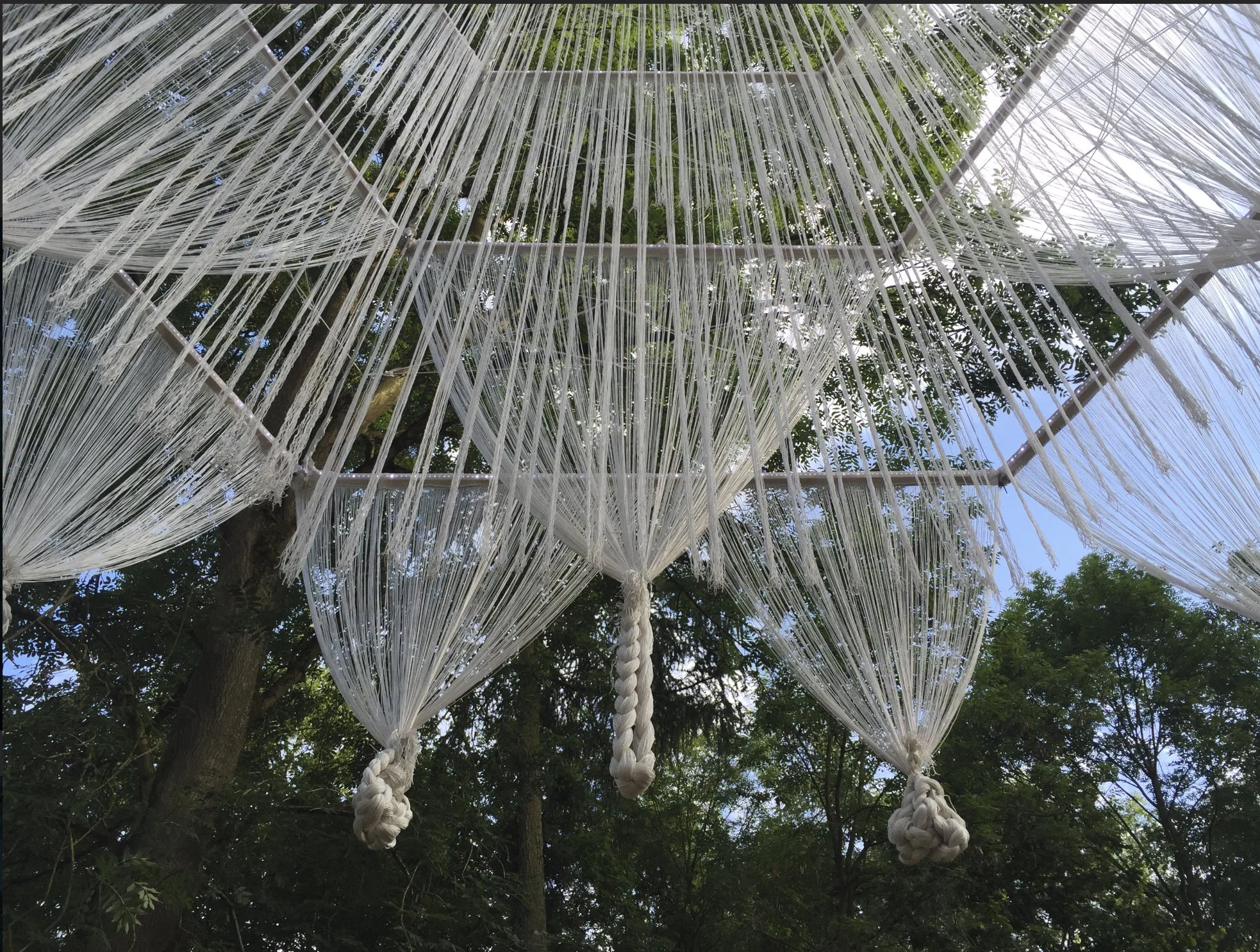
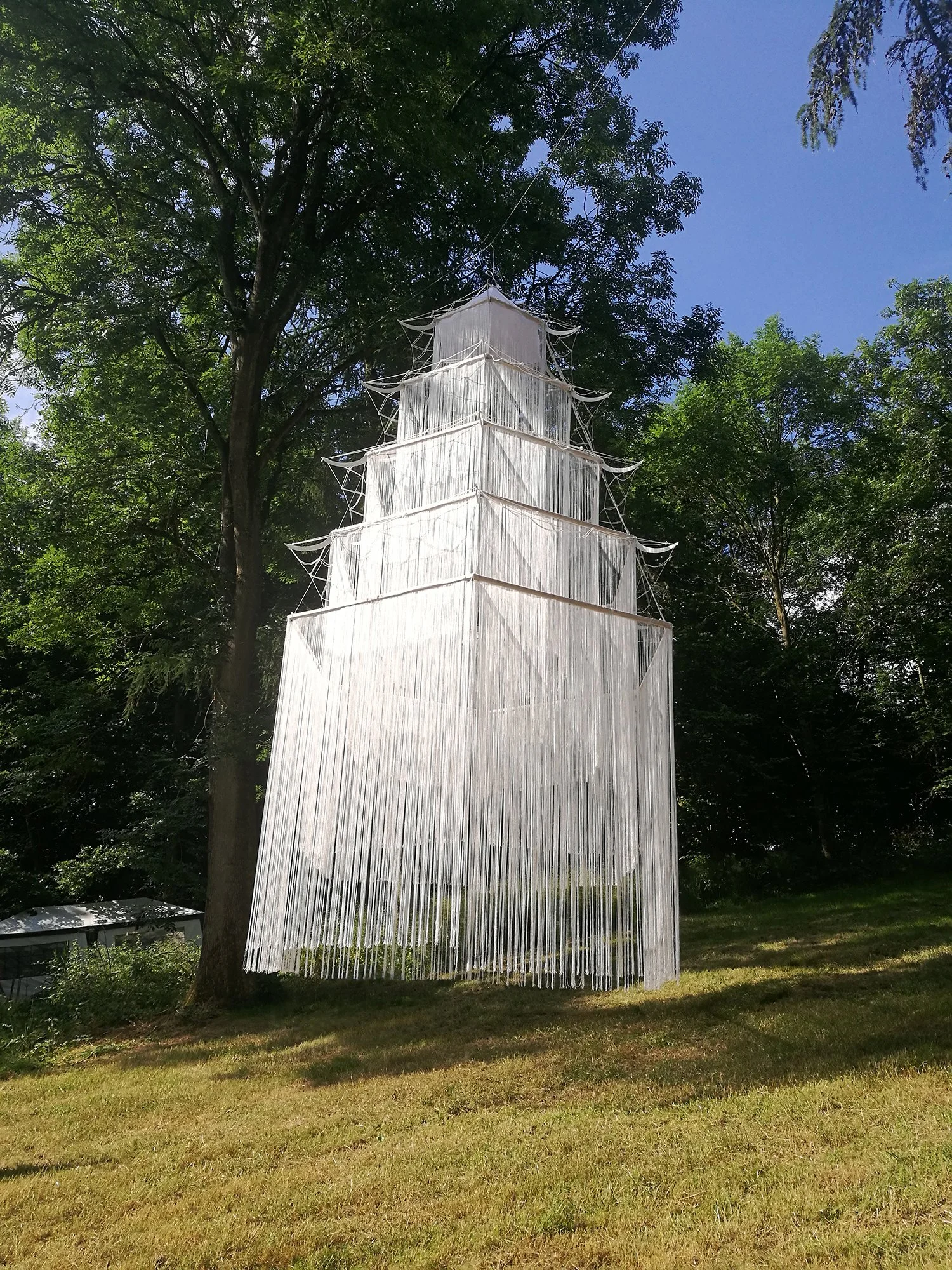
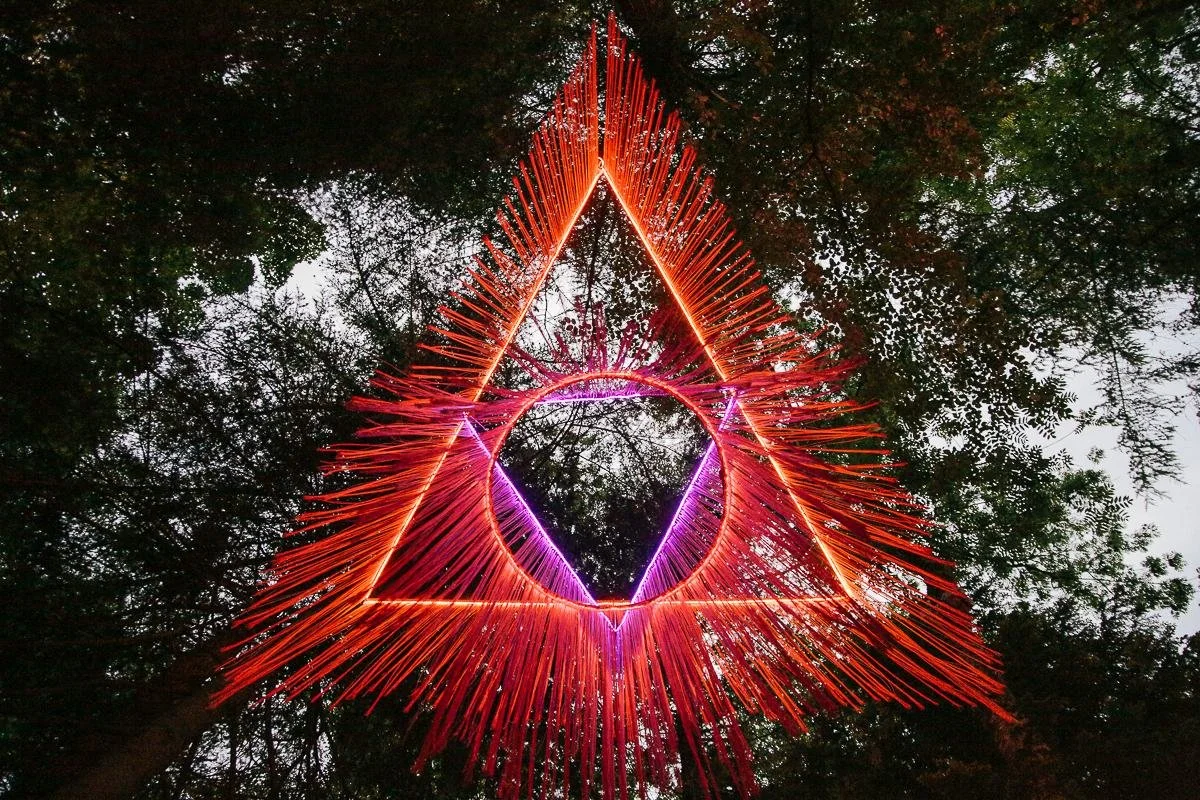
Pagoda, Aeolian, and Aruna are large-scale aerial light sculptures realised across the UK and Ireland's major festival sites and The Bowes Museum - fabric, steel, and programmable light built to create conditions for contemplation in the open air, each work changing with every site, season, and time of day.
Release Date
2015-2018
Type
IMMERSIVE LIGHT INSTALLATION
Specifications
INSTALLATION / LIGHTING / FABRICATION & CONSTRUCTION
Comissioner
LATITUDE / WILDERNESS / NOISILY / BESTIVAL / ELECTRIC PICNIC / THE BOWES MUSEUM
Pagoda, Aeolian, and Aruna are a celebration of the invisible forces that shape the world around us — an inquiry into how light, material, and form can create conditions for contemplation: not instructing an audience what to feel, but building a space in which feeling becomes possible. They are an invitation to look upward, to pause, and to find in a field at midnight or a museum at noon something that belongs to neither place entirely — a quality of stillness that arrives when a work is precisely, carefully, made.
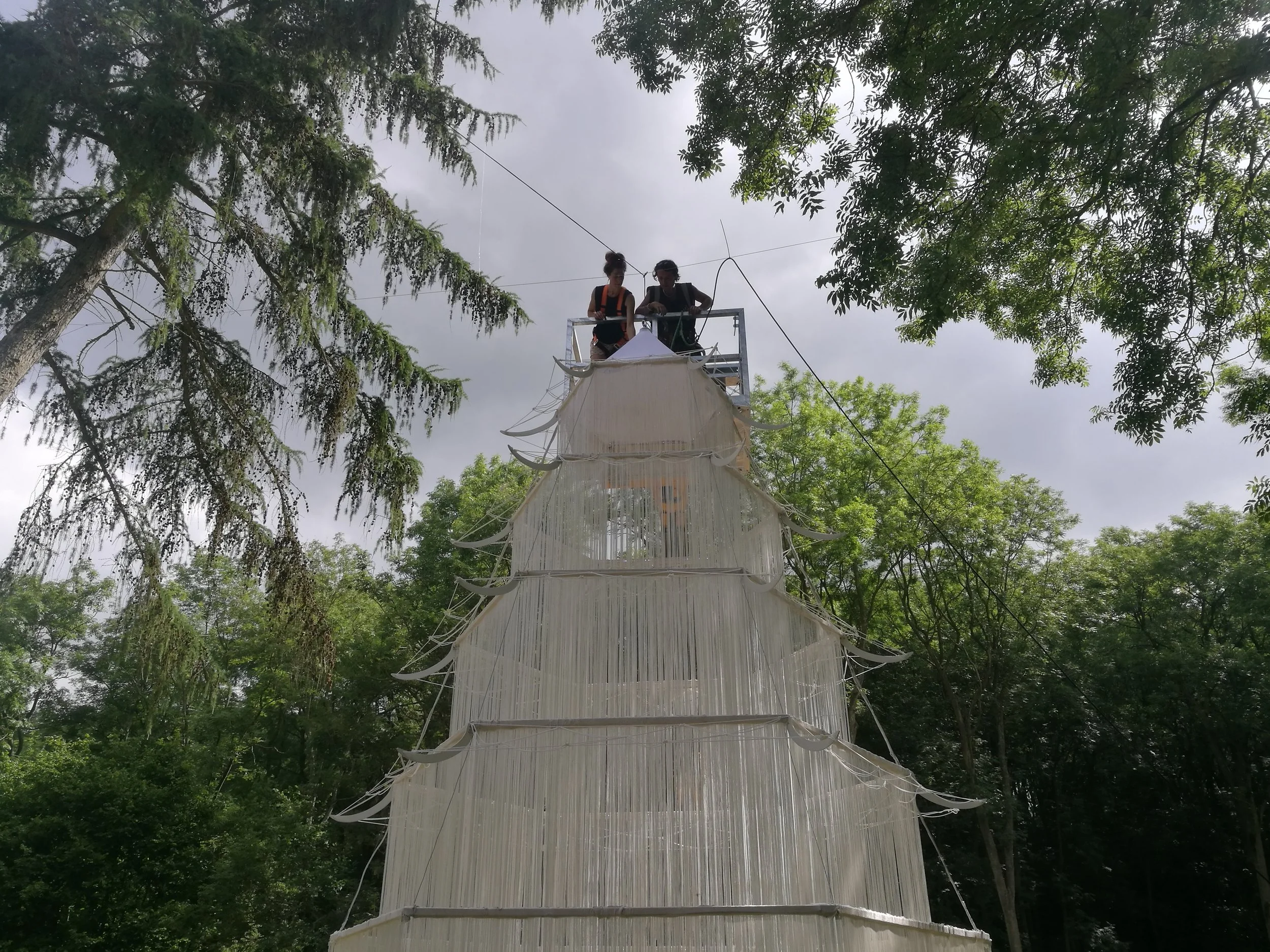
Each installation takes its name from a different register of the natural and philosophical world, and each name holds the work's intention within it. Aeolian refers to wind: things shaped, carried, and sounded by moving air — a piece about the invisible forces acting on form, fabric in constant responsive dialogue with the atmosphere around it, never the same twice. Aruna draws from Sanskrit, naming the reddish luminescence that precedes the sunrise — the light that arrives before the light, charged with anticipation and transition — a piece about threshold, the moment between states, the quality of illumination that belongs to neither darkness nor day. Pagoda, the largest of the three at 8 metres by 4 metres, takes its form from the traditional Asian pagoda and Zen design principles — architecture as an invitation to stillness, drawing the eye upward and the mind inward.
Together, the three works trace a sustained inquiry into how light, material, and presence act on the body and the spirit — in a field, in a forest, in a gallery, in the dark.
Pagoda
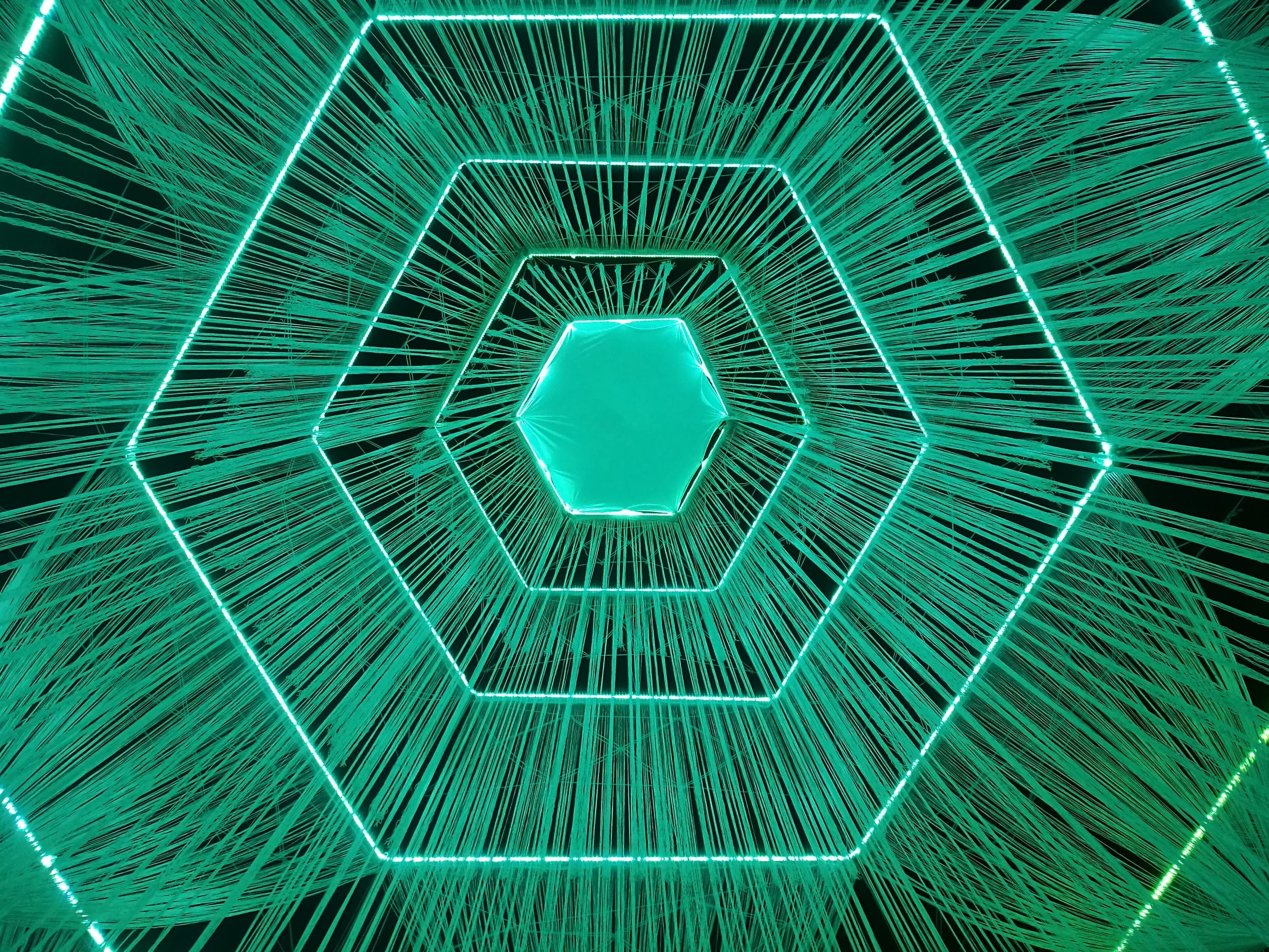
Helena's largest installation to date — 8 metres long by 4 metres wide — the Pagoda is an architectural aerial sculpture inspired by traditional Asian pagoda forms and Zen design principles. Its modular frame system allows the piece to adapt to each site; its white fabric skin means it can be lit any colour, in any pattern, for any context. A custom-designed programmable lighting system means no two iterations of the work are identical.
Debuting at Body & Soul festival in Ireland, the Pagoda toured to Noisily, Latitude, Camp Bestival, Bestival, Wilderness, and Electric Picnic before being exhibited at The Bowes Museum — a trajectory that moved the work from festival meadow to permanent collection context, each setting asking different things of the piece and of the people realising it. The design brief Helena set herself was precise: draw attention skyward. Nurture a sense of calm. Invite contemplation of the present moment.
What the Work Taught Me
Installing the same pieces across radically different sites over three years gave me something that studio-based practice rarely does: a sustained, embodied understanding of how a work changes when its context does.
At Latitude, the Pagoda sat within a curated arts programme, surrounded by an audience that came looking for art. At Wilderness, it was encountered unexpectedly, by people moving between stages. At The Bowes Museum, it entered an entirely different register — architecture, permanence, the weight of institutional space. The physical object was the same. The experience it produced was not.
The programmable lighting was central to this adaptability. Calibrating colour temperature, pattern, and rhythm for each environment — the ambient light conditions of a festival site at dusk, the controlled interior of a museum — was a quiet but significant technical and creative practice. Light behaves differently against white fabric in an open field at midnight than it does in a gallery at noon. Understanding that difference, and making decisions in response to it, is spatial thinking in its most direct form.
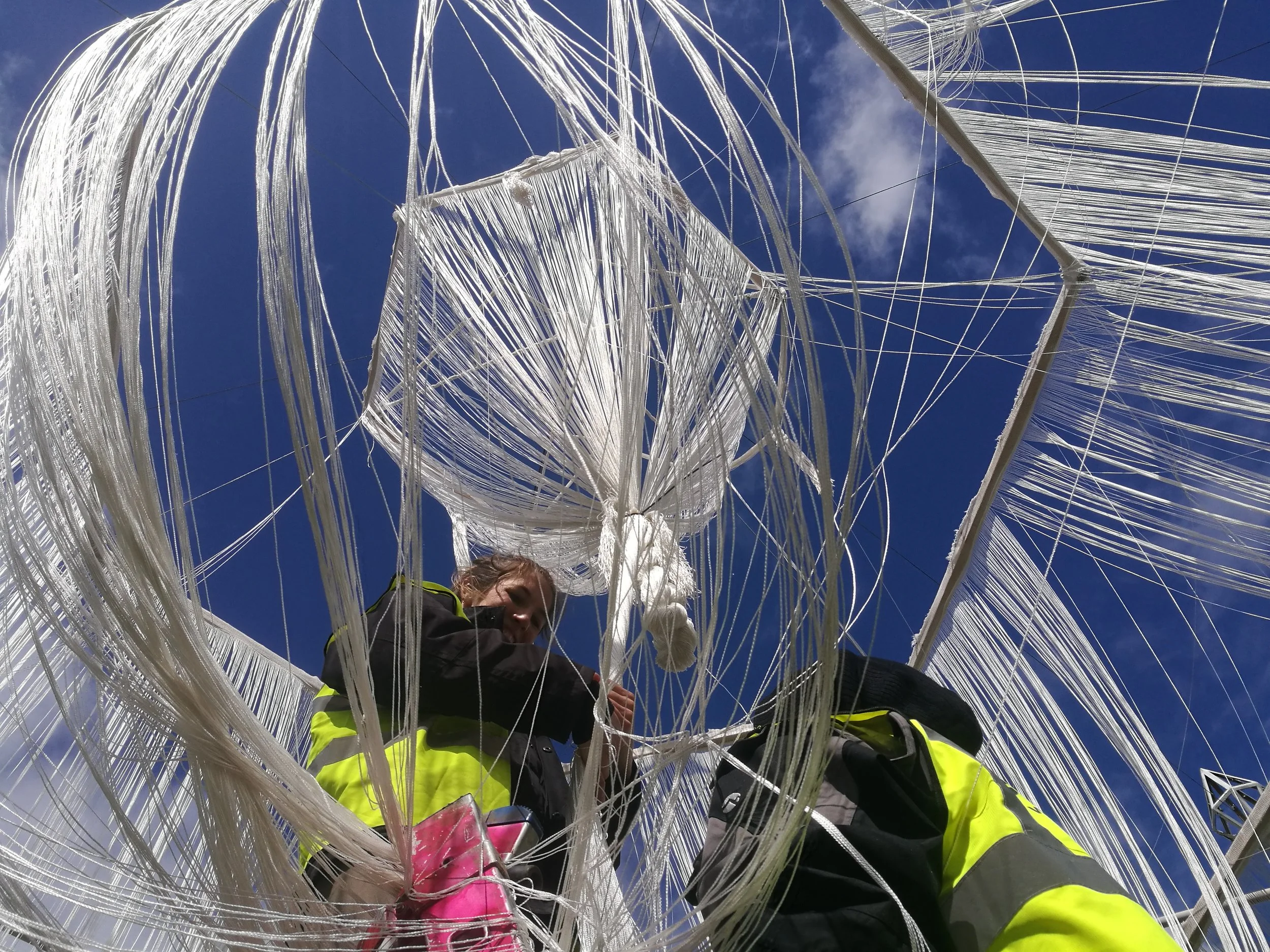
Working long hours, in poor weather, under pressure to have the piece ready before gates opened, also taught me something less glamorous but equally important: that the quality of the final work depends entirely on the rigour and care brought to its construction. An aerial sculpture that isn't properly tensioned moves wrongly in the wind. An LED rig that isn't cleanly finished undermines the delicacy of what it's illuminating. The making and the meaning are not separate.
On Collaboration
My role was not that of designer — this was Helena's work, and her vision was the authority throughout. What I brought was a willingness to serve that vision with precision and commitment, and the kind of calm, lateral thinking that installation in unpredictable outdoor environments constantly demands.
That experience of working in close, sustained collaboration with a practising artist — learning to understand a creative vision deeply enough to realise it faithfully under pressure — is something I carry into every project I work on now. It shaped how I think about the relationship between the person who conceives a work and the people who make it exist in the world. Those roles are distinct, and both matter.
"Isabella is calm, focused and hard working and was an invaluable member of my crew. She's got a great eye for detail, communicates her ideas well, and is always good to ask for advice. She has a boundless curiosity for the natural world and is an inspiration to be around." - Helena Doyle, Artist