Viper
An interactive video game installation.
Viper
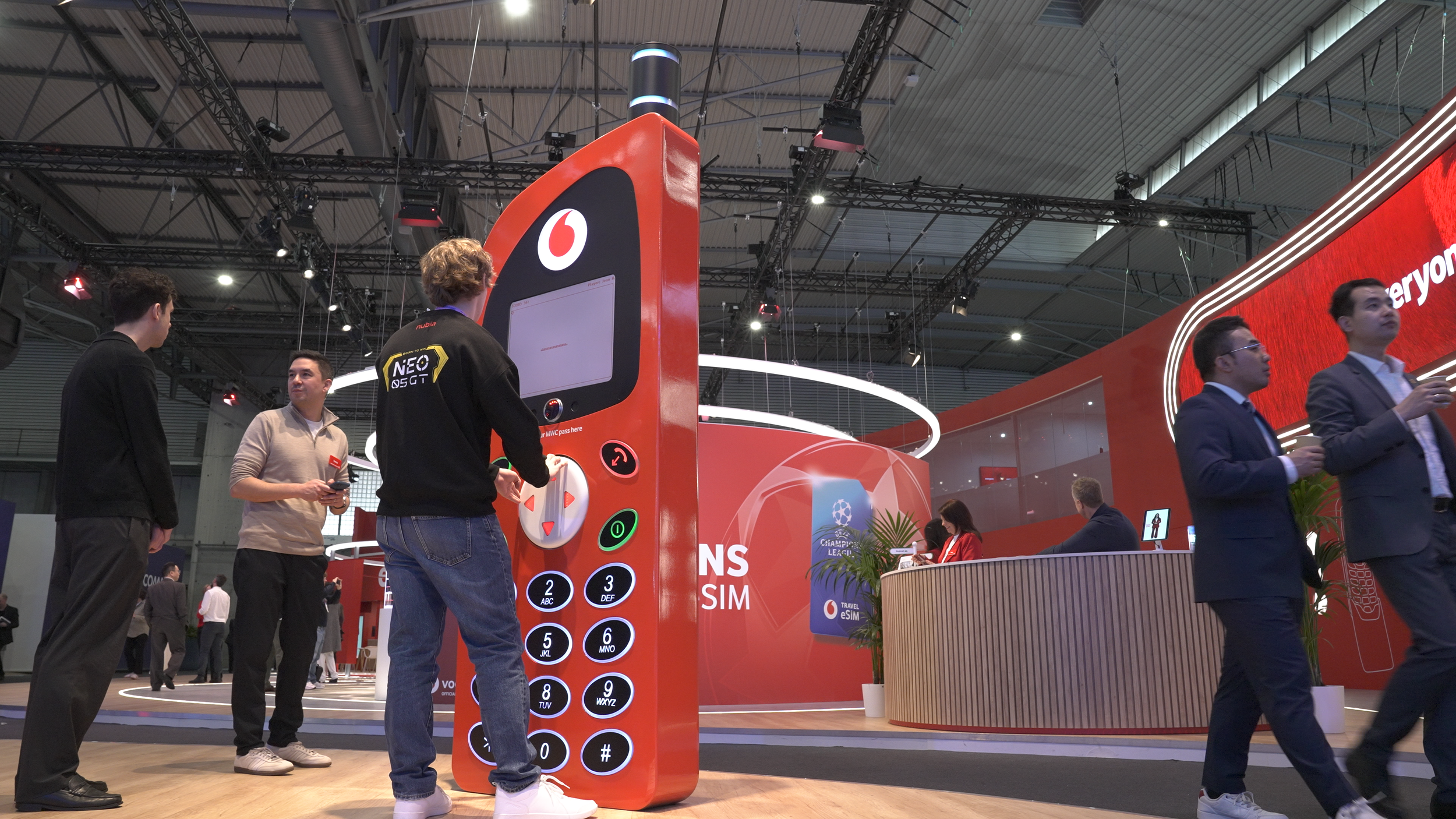
Viper is an interactive game installation rooted in the moment connectivity became personal — a 6-foot reimagining of the game that lived in the pocket of a generation, now standing at the centre of the world's largest mobile technology conference. Through a live trigger architecture connecting a single player's actions to an entire exhibition environment, the installation transformed a trade show stand into a shared event — one person, one controller, one room responding in real time.
Release Date
2026
Type
INTERACTIVE VIDEO INSTALLATION
Specifications
INTERACTIVE GAME BUILD, REAL-TIME TRIGGER ARCHITECTURE, MULTI-SURFACE ANIMATION, LEADERBOARD INTEGRATION
Comissioner
VODAFONE GROUP
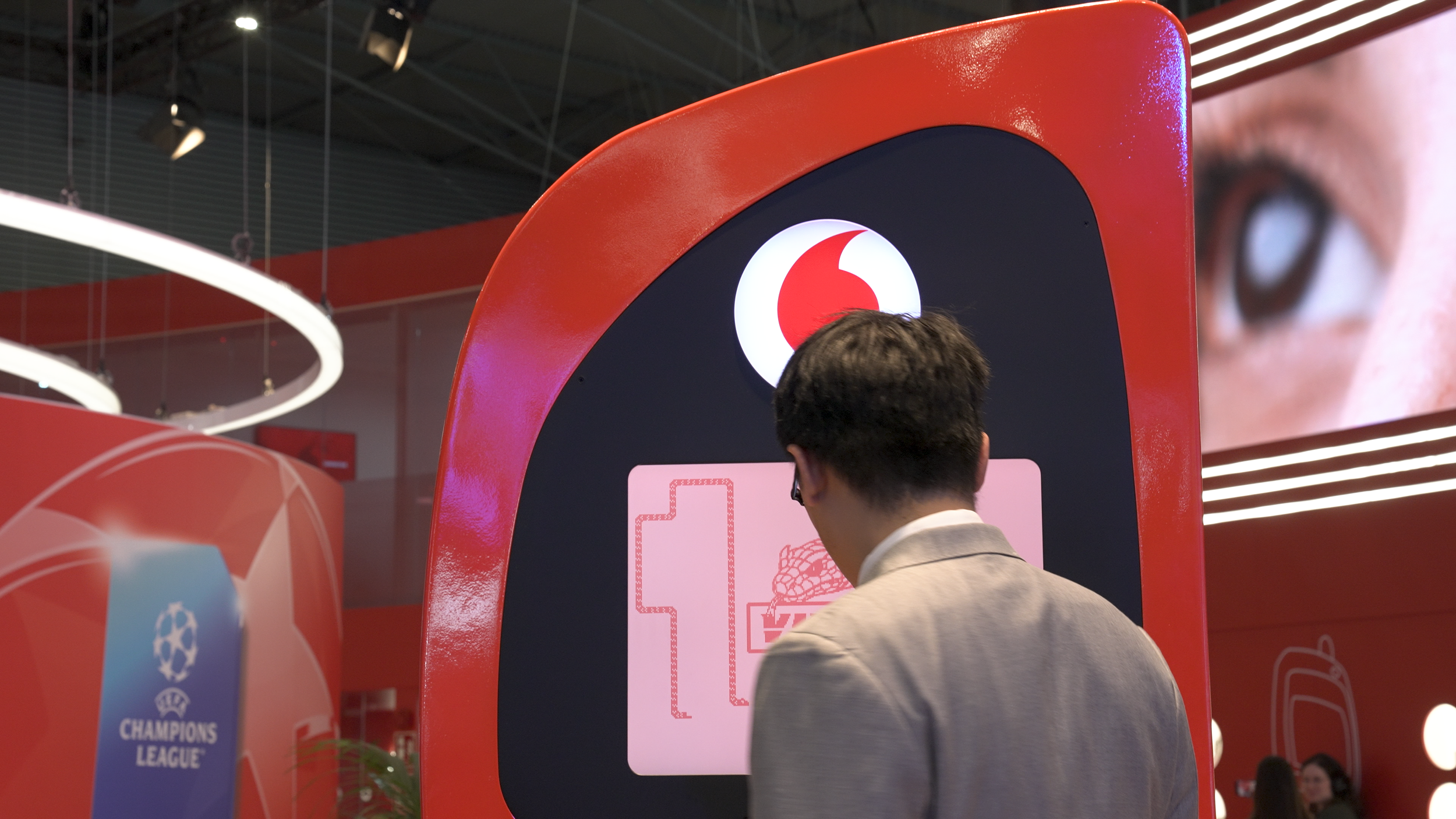
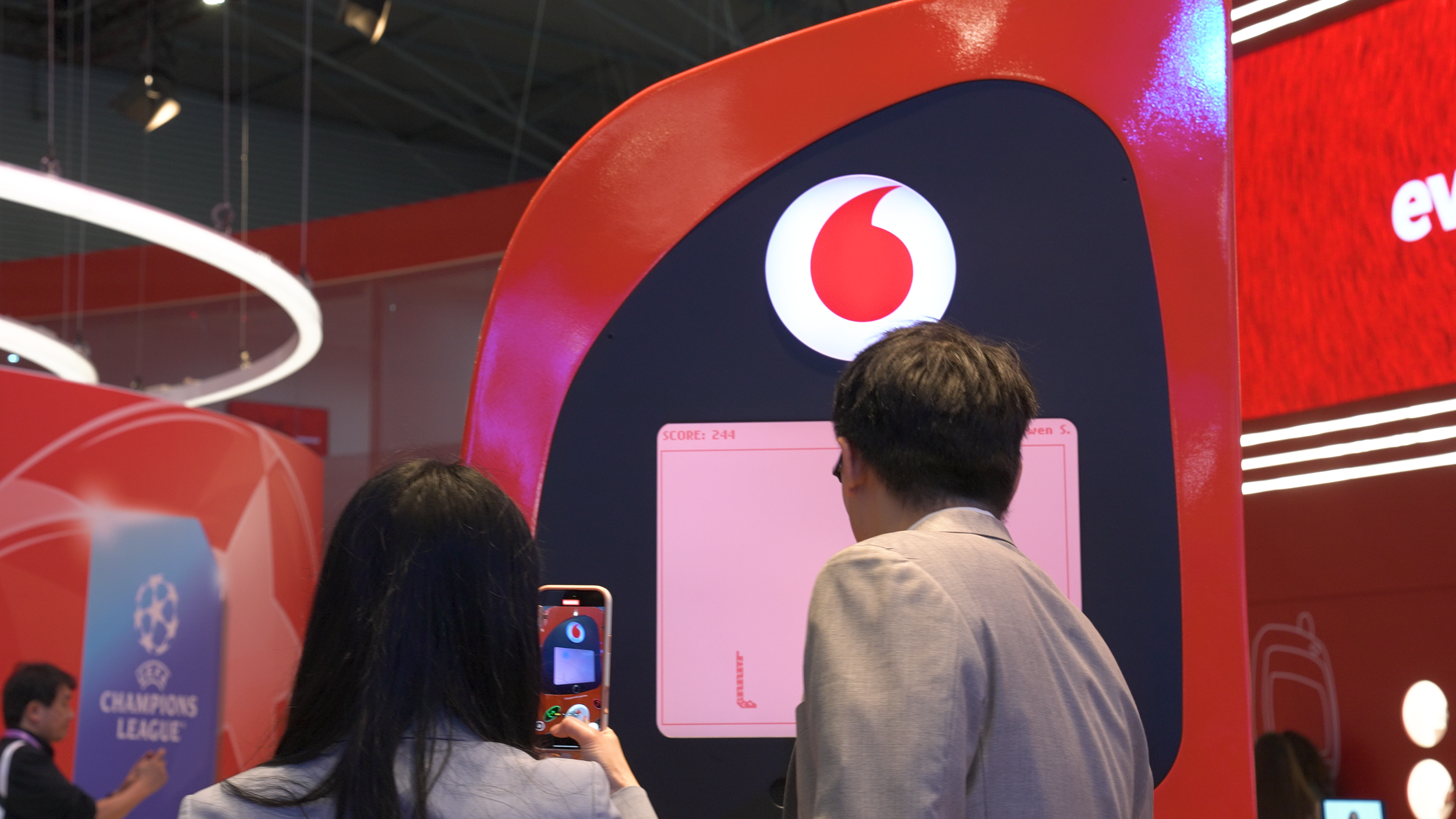
Viper is an interactive video and game installation conceived for Vodafone Group's exhibition presence at Mobile World Congress 2026, Barcelona — a 6-foot portrait screen running a custom-built Snake game, connected through a live trigger architecture to a 32-screen brand installation and an 8-metre curved display wall. A single player, a physical controller, and a game almost everyone already knew how to play — reaching outward, in real time, to change the state of an entire room.
A celebration of the moment connectivity became personal — an inquiry into what it means that a generation's first experience of a connected world lived in their pocket, in a game, on a device so simple it needed no instruction. It is an invitation to hold that history in your hands again, at a scale that makes the distance travelled impossible to ignore.
The choice of Snake was not arbitrary. Vodafone's presence at MWC 2026 was built around a celebration of 40 years of connectivity — the long arc from the earliest consumer mobile moments to satellite and AI-enabled networks. Snake, in its Nokia 3310 incarnation, is one of the most universally recognised touchstones of that arc: the game that lived in the pocket of a generation, on a device that was, for many people, their first experience of a connected world. Remaking it at 6 feet tall — physical, monumental, impossible to miss — was a way of making that history visceral rather than merely referenced. The game people remembered as small, private, and personal became large, public, and shared. The nostalgia was real, but the scale reframed it: this was not a fond look backward but a demonstration of how far the distance had travelled.
It also meant that almost everyone on the stand already knew how to play. No instructions. No learning curve. The interface was already inside them — which freed the experience to be about something other than the mechanics. The game was thematically coherent with the wider stand: the Nostalgia: 40 Years of Connectivity thread running through the 32-screen installation found its most direct, participatory expression here — not as something to look at, but something to hold in your hands.
The deeper challenge was not the game itself but what happened around it. Working in Pixera — the media server platform managing content across the wider stand - a trigger architecture was designed to connect the game's internal states to the broader display environment. Specific gameplay events — a score threshold reached, a top score claimed, a leaderboard position taken — fired outward from the Viper screen as triggers, activating pre-built animation sequences across the 32-screen installation and the curved display wall simultaneously. Each trigger had to be precisely timed: too slow and the connection was lost, too fast and it felt mechanical rather than alive. The calibration was done live, in the space, adjusted against the physical reality of how quickly a person at the controller could perceive cause and effect across a stand the size of a large room.
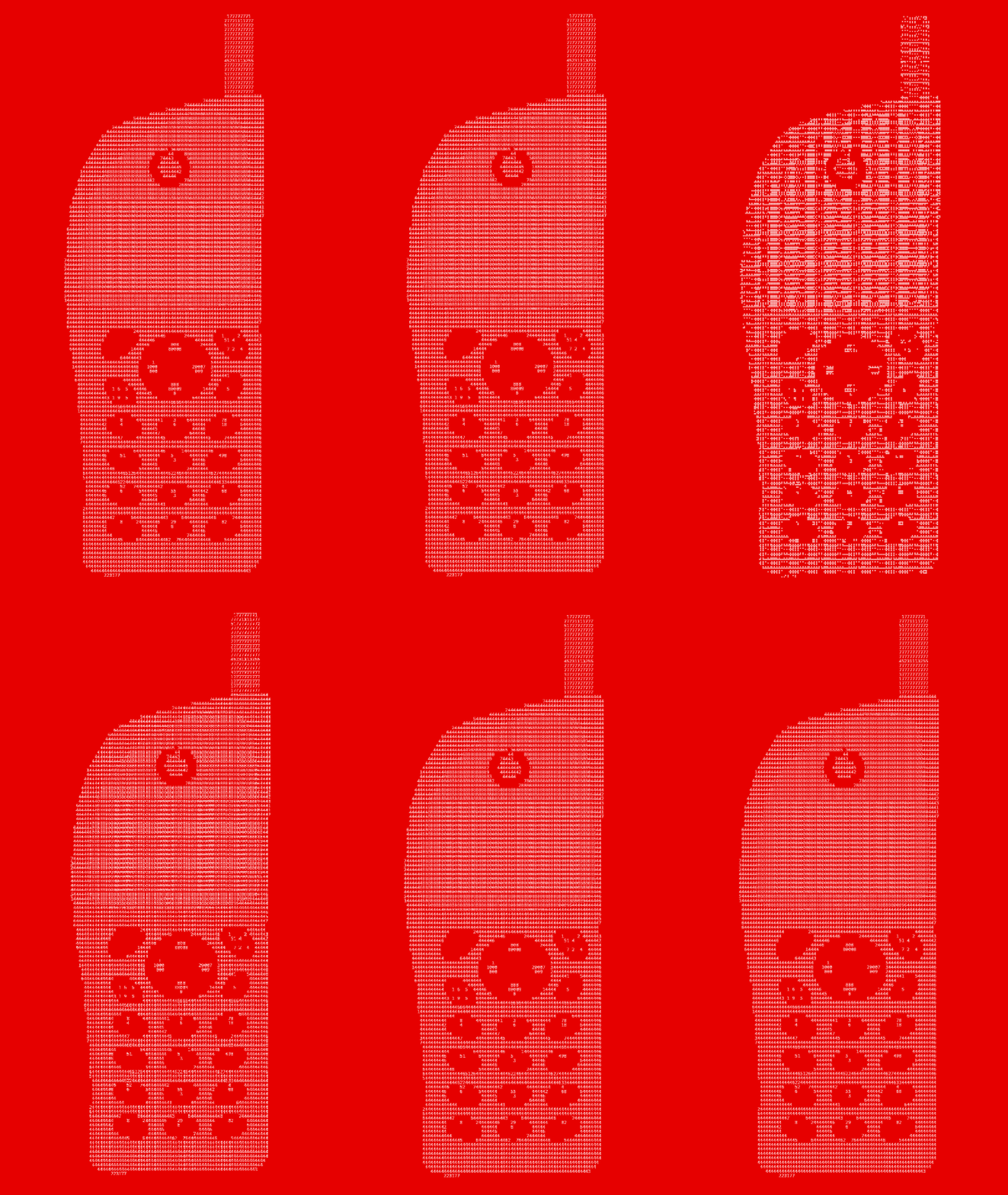
An 8-bit, inspired video game.
The brief: create a video fame. Make it playable on the stand at Mobile World Congress.
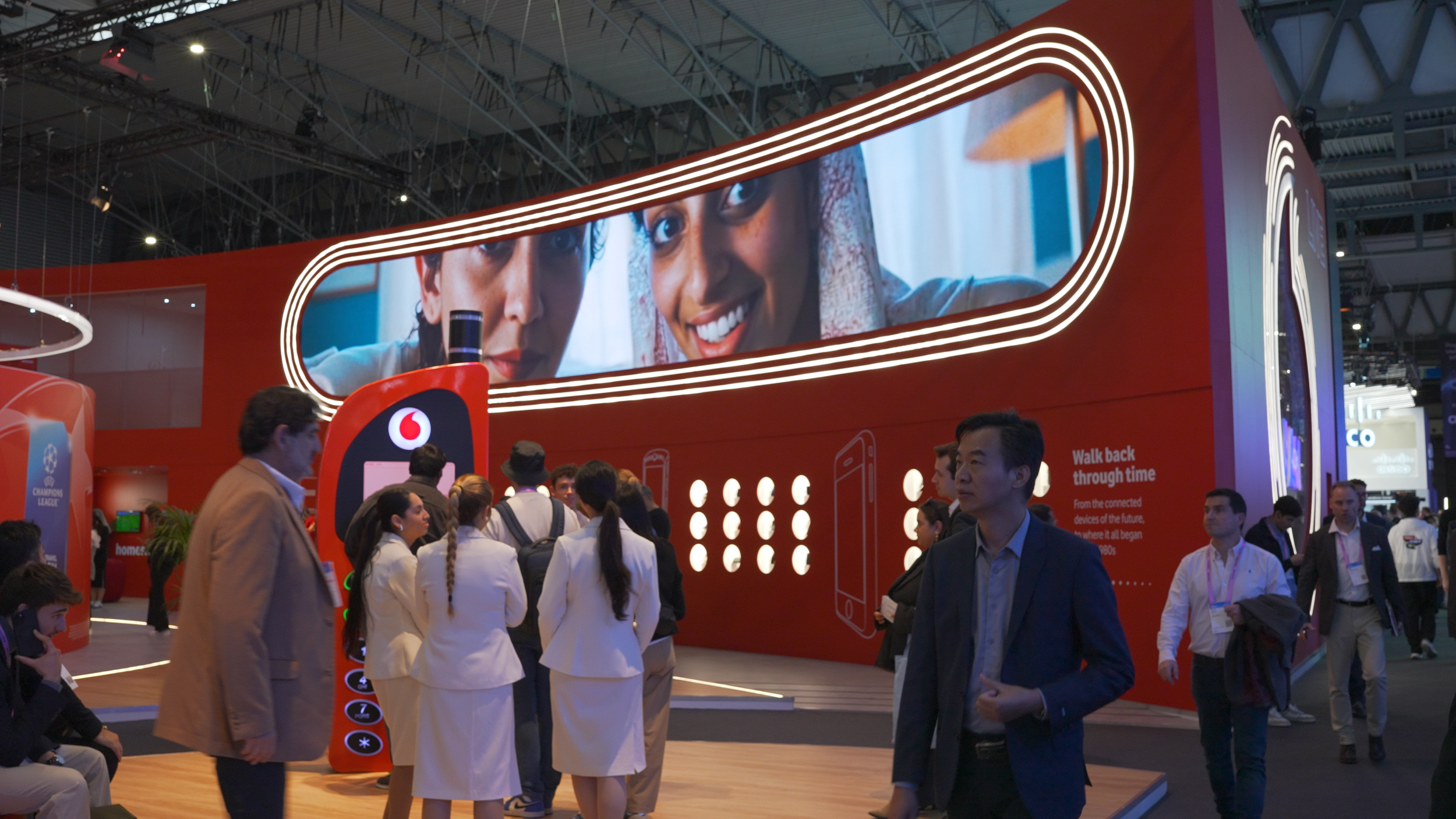
The takeover animations were designed and built to read as a response to the game event from anywhere on the stand — fast enough to feel immediate, bold enough to be visible at distance, distinct enough from the ambient content to register as an interruption: the room noticing what had just happened. The top-score takeover was the most emphatic in the system — longer, more expansive, a different visual register entirely. Someone watching from the other side of the hall would know, without being told, that something significant had just happened. The leaderboard had a new name on it. The room had marked the moment. The animations were built to feel like applause.
The leaderboard transformed the installation across the day. Top scores were pulled out of the game screen and into the wider content environment, making a high score a public event rather than a private achievement. People came back. They watched others play. They waited for the takeover animations. A game that had started as a single-screen experience had become, in practice, a live performance — the player the unknowing performer, the stand the stage.
The interesting design problem was never the game mechanics. It was the question of how a single point of interaction — one person, one controller, one portrait screen — could reach outward and change the state of an entire environment. How do you make a room feel like it is responding to a person? How do you design that response so it feels earned rather than arbitrary? Those are not game design questions. They are spatial and experiential design questions. Viper was the interface. The stand was the instrument.
Viper was commissioned by Vodafone Group and presented at Mobile World Congress, Barcelona, March 2026.
Technical Stack
HTML / CSS / JavaScript — game build and animation state management Pixera — media server, trigger architecture, multi-environment content management Physical controller integration — hardware to software input mapping Leaderboard system — score capture, persistent display, top-score trigger events Multi-environment synchronisation — 32-screen installation and curved display wall